
BMW 1 Series vs Mercedes A-Class: Which Used Premium Hatchback Wins?

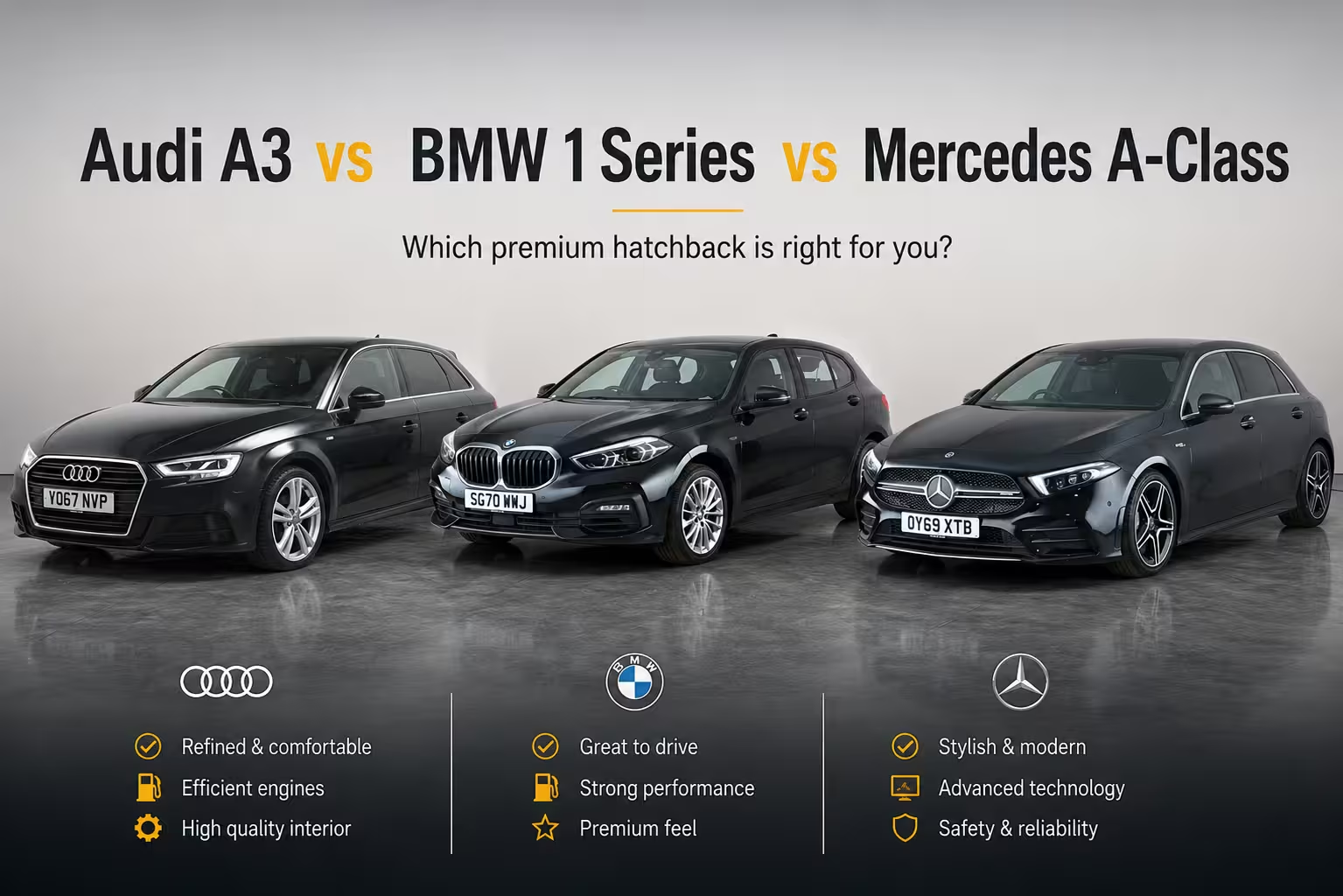
The premium compact hatchback is one of the most competitive segments in the used car market. Buyers who want something smarter than a Golf or Audi A3 — but don't want to stretch to a full executive saloon — inevitably find themselves comparing the BMW 1 Series and the Mercedes-Benz A-Class. They're similarly priced, similarly sized, and similarly badged. They're also quite different cars that serve meaningfully different buyers.
This comparison focuses on 2022–23 used examples: the F40-generation BMW 1 Series (launched 2019, updated 2022) and the W177-generation Mercedes A-Class (launched 2018, updated 2022). These are approximately three-year-old cars in the current market, well past their steepest depreciation and representing strong value in the used premium compact segment. Here's everything you need to know before you choose.
What generation are we looking at?
The BMW 1 Series F40 was a significant departure when it launched in 2019. For the first time in the nameplate's history, BMW switched from rear-wheel drive to a front-wheel-drive platform. The move was controversial among driving enthusiasts but delivered a substantially more practical interior — particularly in the rear — and opened the door to more accessible pricing. The 2022 update brought revised styling, improved iDrive 8 infotainment on higher-spec cars, and mild hybrid technology across the petrol range. The most common used variants are the 118i petrol, 120i petrol, 120d diesel, and the performance-oriented M135i xDrive.
The Mercedes-Benz A-Class W177 has been a significant commercial success since its launch. It brought a dramatically more modern interior than its predecessor, with Mercedes' MBUX infotainment system and a portrait-orientation touchscreen that was genuinely ahead of its class when new. The 2022 facelift updated the front styling and improved the MBUX system. Common used variants include the A 180, A 200, A 220, and A 200 d diesel, all with 48V mild hybrid assistance as standard on petrol variants.
2022–23 BMW 1 Series vs Mercedes A-Class — key facts
1 Series
BMW 1 Series F40
120i M Sport — 2022 facelift
Generation
F40 (2022 facelift)
Drive
Front-wheel drive
Sweet spot engine
120i — 170hp 4-cyl
Real-world mpg
38–46mpg (petrol)
Gearbox
6-speed auto (smooth)
Rear headroom
Adequate for adults
Infotainment
iDrive 8 (14.9" curved)
Driving bias
More engaging
Used price (120i)
£22–28k
A-Class
Mercedes A-Class W177
A 200 AMG Line — 2022 facelift
Generation
W177 (2022 facelift)
Drive
Front-wheel drive
Sweet spot engine
A 200 — 163hp MHEV
Real-world mpg
38–46mpg (petrol)
Gearbox
7-speed DCT (urban jerk)
Rear headroom
Tight for tall passengers
Infotainment
MBUX dual screen
Driving bias
Comfort / refinement
Used price (A 200)
£20–26k
What they share: Front-wheel-drive platform, 48V mild hybrid technology across petrol variants, five-door hatchback body, wireless Apple CarPlay and Android Auto (on higher-spec systems), adaptive cruise control, automatic emergency braking, and broadly equivalent running costs on comparable powertrains.
Design and visual appeal
The F40 1 Series facelift from 2022 is a cleaner, more cohesive design than the original F40's somewhat polarising wide kidney grille. The revised front end is more restrained, and the overall proportions — relatively upright greenhouse, wide stance, short overhangs — read as modern and confident rather than sporty. It's recognisably a BMW without demanding the attention the kidney grille controversy attracted on early examples.
The W177 A-Class facelifted from 2022 is a sharper, more assertive design than the pre-facelift car. The front end is wider and lower, the light signatures are more complex, and AMG Line trim — which most buyers chose — gives it a distinctly sportier character than the standard car. It's a design that has aged well precisely because it was ahead of mainstream hatchback design norms when it launched.
Both are available in five-door hatchback form only for the standard models. The A-Class also has a Saloon and Cabriolet variant; the 1 Series is hatchback-only. For buyers who want estate practicality, neither offers it — the BMW 2 Series Active Tourer and Mercedes B-Class are the respective answers.
Interior: the pivotal difference
This is the most important section of this comparison, because the interior experience is where the two cars diverge most fundamentally — and it's where most buyers make their final decision.
The BMW 1 Series interior in 2022–23 facelifted form is driver-centric and well-executed. On iDrive 8-equipped cars (M Sport and higher), the curved display unit spanning digital instruments and infotainment is genuinely impressive — sharp, fast, and intuitive in a way that feels native to the car rather than bolted on. Physical shortcut buttons provide easy access to key functions. The materials quality is good but not exceptional — there are some hard plastics visible in the lower cabin areas that feel inconsistent with the premium positioning. The driving position is excellent, the steering wheel is perfectly sized, and the sense of occasion when you settle into the driver's seat is real.
Rear space in the 1 Series is substantially better than the previous rear-wheel-drive generation, and this is one of the main benefits of the platform switch. Two adults can sit comfortably behind the front seats, headroom is adequate, and legroom is competitive for the class. It's not cavernous, but it's no longer the compromise it once was.
The W177 A-Class interior is genuinely special for its class and for its price. The widescreen dual-display MBUX setup — combining a 10.25-inch instrument display and a 10.25-inch infotainment touchscreen as standard on most trim levels, or a 12.3+10.25-inch configuration on higher specs — creates a cockpit feel that was ahead of mainstream competitors when the car launched and still holds up well in 2022–23 examples. The “Hey Mercedes” voice assistant is excellent: natural language, contextual understanding, and the ability to control almost any function by voice. Build quality and material quality are both strong, with soft-touch surfaces in the primary contact areas and an overall impression of premium substance.
The A-Class rear cabin is the weaker area. The car's sloping roofline compromises rear headroom for taller passengers, and legroom is tight if front occupants have their seats pushed back. It's the most significant practical limitation of the A-Class, and it's worth testing with the actual passengers who'll use the rear seats before buying.
Driving experience
The platform switch to front-wheel drive robbed the 1 Series of its traditional rear-wheel-drive character, and it's worth being honest about that. The F40 is not the same driving experience as the E87 or F20 it replaced. It doesn't have the same rear-driven balance, the same natural oversteer balance, or the same sense of precision that made the old 1 Series the class benchmark.
What it does have is a well-tuned, capable chassis that's better than almost anything else in the front-wheel-drive premium hatchback segment. The steering is accurate and well-weighted, the body control is excellent, and in Sport mode the car sharpens meaningfully without becoming uncomfortable. The M135i xDrive is a genuinely fast and entertaining car that channels some of the old 1 Series spirit through four-wheel-drive traction and a 306hp turbocharged engine. The standard 118i and 120i are refined and engaging enough for everyday driving without exciting anyone who misses the F20.
The A-Class drives very well for a premium compact hatchback but makes no pretence of being a driver's car. It's comfortable, refined, and easy to live with. The steering is light and accurate. The ride on 18-inch wheels — standard on AMG Line — is well-damped for the class. Refinement at motorway speeds is particularly impressive, with wind and road noise suppressed to a degree that makes it feel larger than it is. It's the more relaxed and effortless daily companion of the two.
If driving engagement matters to you, the 1 Series is the better car. If effortless, refined everyday driving is the priority, the A-Class is slightly more accomplished.
Engine and powertrain options
The 2022–23 BMW 1 Series range starts with the 118i (136hp 1.5-litre three-cylinder petrol, 48V mild hybrid). It's refined and reasonably efficient but modest in performance terms — fine for urban and suburban driving. The 120i (170hp 2.0-litre four-cylinder petrol, 48V mild hybrid) is the sweet spot of the range: properly quick, more refined at higher revs than the three-cylinder, and genuinely pleasing to drive. The 120d (150hp diesel, 48V mild hybrid) is the high-mileage choice, returning real-world fuel economy of 50–58mpg consistently. The M135i xDrive (306hp 2.0-litre petrol, 4WD) is for buyers who want genuine hot hatch performance under premium clothing.
The 2022–23 Mercedes A-Class range covers the A 180 (136hp 1.3-litre petrol) for buyers prioritising running costs, the A 200 (163hp 1.3-litre petrol, EQ Boost 48V mild hybrid on post-facelift cars) as the volume seller, the A 220 (190hp 2.0-litre petrol) for more relaxed performance, and the A 200 d (150hp 1.5-litre diesel) for high-mileage motorway users. The AMG A 35 4MATIC (306hp) sits at the top for performance buyers.
The powertrain choice between equivalent variants is fairly balanced. BMW's four-cylinder 120i feels more characterful than the Mercedes' 1.3-litre in the A 200, and the BMW's six-speed automatic is smoother than the A-Class's seven-speed dual-clutch in low-speed town driving (dual-clutch gearboxes can be jerky at very low speeds, and the A-Class's is no exception to this known characteristic).
Technology
Technology was the A-Class's headline advantage when it launched and it retains an edge on the 2022–23 BMW in specific areas. MBUX is genuinely better than iDrive 8 for voice control — the natural language processing is more capable and the contextual awareness of the system is a meaningful step ahead. The standard widescreen dual-display setup also gives the A-Class cabin a more dramatic appearance that many buyers respond to.
BMW's iDrive 8, however, is faster and more logically structured for everyday operation. The physical shortcut buttons that returned in the 2022 update make common functions (volume, previous track, menu shortcut) quicker to access without eyes-off-road interaction. Apple CarPlay and Android Auto are wireless on both cars on 2022–23 examples with the higher-spec infotainment systems.
Both include the standard driver assistance suite: adaptive cruise control with lane-keeping, automatic emergency braking, parking sensors front and rear, and a reversing camera. The quality of these systems is broadly equivalent.
Reliability and ownership
The W177 A-Class has a mixed reliability reputation that's worth understanding before buying. Early W177 production (2018–20) had documented issues with the MBUX infotainment system — software crashes, screen freezes, Bluetooth connectivity problems — and the 7-speed dual-clutch gearbox on 1.3-litre variants has generated complaints about low-speed jerkiness and, in some cases, judder during slow-speed manoeuvring. The 2022 facelift addressed many of the MBUX software issues, and 2022–23 examples are generally better sorted. The dual-clutch gearbox characteristic is largely inherent to the transmission type rather than a fault, but buyers who spend a lot of time in slow urban traffic should drive one thoroughly in those conditions before buying.
The F40 BMW 1 Series has had a more positive reliability profile than its predecessor in specific areas. The three-cylinder 118i engine has been more reliable than expected given initial scepticism. The four-cylinder 120i has had no significant issues. The 48V mild hybrid system has been largely trouble-free. iDrive software on early F40s had some interface issues; the 2022 facelift update resolved most of these. The main area of concern is the N20 engine in pre-facelift 120i — timing chain wear was an issue on early examples, though 2022 facelifted cars use a different specification.
Check service history thoroughly on any 2022–23 example of either car. On the A-Class, check that MBUX software is up to date and test the gearbox carefully in slow traffic. On the 1 Series, verify oil service intervals and check for any iDrive software history.
Category by category — where each car wins
Driving engagement
The 1 Series is the more involving hatchback to drive — better-weighted steering, sharper body control, more rewarding on any road.
1 Series
Interior ambience
The A-Class MBUX dual-screen cockpit is genuinely class-leading in visual drama and material quality. A step ahead of the 1 Series cabin.
A-Class
Voice control
"Hey Mercedes" offers superior natural language understanding and contextual awareness over BMW's voice assistant. The best in class at this price.
A-Class
Infotainment ease of use
iDrive 8's physical shortcut buttons make common functions faster to access without eyes-off-road. More logical for daily operation.
1 Series
Rear headroom
The F40's FWD platform delivered substantially better rear headroom than the old 1 Series. The A-Class sloping roofline compromises rear headroom notably.
1 Series
Motorway refinement
The A-Class suppresses wind and road noise to an exceptional degree for a hatchback — the more effortless long-distance companion.
A-Class
Gearbox smoothness
BMW's 6-speed torque-converter auto is smoother in slow traffic than the A-Class's 7-speed dual-clutch, which can jerk at low speeds.
1 Series
Reliability track record
The F40 has a cleaner reliability record on 2022–23 examples. Early A-Class W177 DCT and MBUX issues are largely sorted on post-facelift cars but worth testing.
1 Series
Used value
A-Class typically £2–3k cheaper than equivalent 1 Series used — more car per pound for buyers whose priorities suit the Mercedes.
A-Class
Running costs
Comparable economy, comparable insurance groups. BMW servicing is marginally cheaper at main dealer level but both have strong independent networks.
Draw
Used prices
Both models have depreciated significantly from their original list prices and represent strong value on the used market. A 2022–23 BMW 1 Series 118i M Sport with typical mileage can be found in the £19,000–£25,000 range. The 120i M Sport is typically £22,000–£28,000. The 120d M Sport is typically £21,000–£27,000. The M135i xDrive is typically £33,000–£40,000 for 2022–23 examples.
The W177 A-Class commands slightly lower prices than equivalent 1 Series variants on the used market, which reflects both the depreciation correction from high original volumes and the dual-clutch gearbox perception among informed buyers. A 2022–23 A 200 AMG Line can be found in the £20,000–£26,000 range. The A 220 AMG Line is typically £23,000–£29,000. The A 200 d AMG Line is typically £21,000–£26,000.
The A-Class's lower used price than the equivalent 1 Series is worth noting: for buyers who prioritise the interior technology and don't have specific concerns about the gearbox, the A-Class can offer more car for the same money used.
Running costs
Running costs are broadly comparable between equivalent powertrain choices. Both petrol mild hybrids return similar real-world economy (typically 38–46mpg in mixed driving). The diesels in both ranges are competitive at 50–58mpg. BMW main dealer servicing is typically slightly cheaper than Mercedes main dealer servicing; both are served by well-established independent specialist networks for out-of-warranty cars.
Insurance groups are similar for comparable variants, with the A-Class typically insuring at a marginally lower group than the equivalent 1 Series, though individual premiums vary significantly. Road tax (VED) is equivalent on both for standard petrol and diesel variants.
Who should buy which?
The BMW 1 Series is the right choice if driving engagement still matters to you — even in front-wheel-drive form it's the more satisfying hatchback to drive purposefully. It's also the better choice if rear passenger headroom is a consideration, if you prefer iDrive 8's logic over the touchscreen-heavy MBUX approach, or if the dual-clutch gearbox reputation for low-speed behaviour is a concern. The 120i is the standout variant for most buyers.
The Mercedes A-Class is the right choice if the MBUX interior experience is your priority — it's genuinely class-leading in ambience and technology for the money, and 2022–23 facelifted examples with sorted software are much more reliable than earlier cars suggest. If you're a solo or couple driver who rarely carries rear passengers, the compromised rear headroom is largely irrelevant. The A-Class also tends to be a few thousand pounds cheaper than the equivalent 1 Series used, which is meaningful if budget is a factor. The A 200 with 48V mild hybrid is the sweet spot of the range.
If you're genuinely undecided, drive both — in town traffic specifically. If the A-Class's dual-clutch gearbox bothers you in slow traffic, that feeling won't go away. If it doesn't, the A-Class's interior is genuinely special and hard to walk away from.
Which one is right for you?
Both are excellent — the decision comes down to what you use a car for
1 Series Choose this if...
✓ Driving engagement still matters — it's the more rewarding hatchback even in FWD form
✓ You regularly carry rear passengers who need proper headroom
✓ You prefer iDrive 8's physical buttons over the A-Class's touchscreen-first approach
✓ You spend a lot of time in slow urban traffic and want a smooth gearbox
✓ You want the cleaner reliability track record on a 3-year-old car
A-Class Choose this if...
✓ The MBUX cabin experience matters most — it's genuinely special at this price
✓ You're primarily solo or driving with one passenger — rear headroom isn't a factor
✓ Quiet, effortless motorway refinement is your priority over driving engagement
✓ Budget is a factor — A-Class is typically £2–3k cheaper for equivalent spec
✓ You've driven the DCT in slow traffic and it genuinely doesn't bother you
⚠️
Before buying an A-Class: Test it specifically in slow urban traffic — kerb-crawling, traffic lights, car parks. The 7-speed dual-clutch gearbox on 1.3-litre variants can jerk at low speeds. If it bothers you in 15 minutes of town driving, that won't improve with ownership.
Both regularly in stock at Carsa
Browse used BMW 1 Series and Mercedes A-Class — priced below market value
All our used premium hatchbacks are comprehensively inspected, priced on average £700 below market value, and come with a 90-day warranty. Finance available from 8.9% APR.
✓ £700 below market average ✓ 90-day warranty ✓ Finance from 8.9% APR (10.9% Rep APR) ✓ Soft search — no credit impact
Find a used BMW 1 Series or Mercedes A-Class at Carsa
Carsa stocks both the BMW 1 Series and Mercedes-Benz A-Class regularly, all priced on average £700 below market value and comprehensively inspected before sale. Every car comes with a 90-day warranty as standard, and finance is available from 8.9% APR representative.
Browse used BMW 1 series s at Carsa →
Browse used Mercedes A class at Carsa →
Related articles


Ready to find your next car?
Browse hundreds of expertly prepared used cars — all fully checked, cleaned, and ready to drive away.
Talk to us, anytime.
Our friendly team is just a message or call away.
Message us on whatsapp, 24/7