
BMW 3 Series vs Mercedes C-Class: Which used executive car is right for you in 2026?
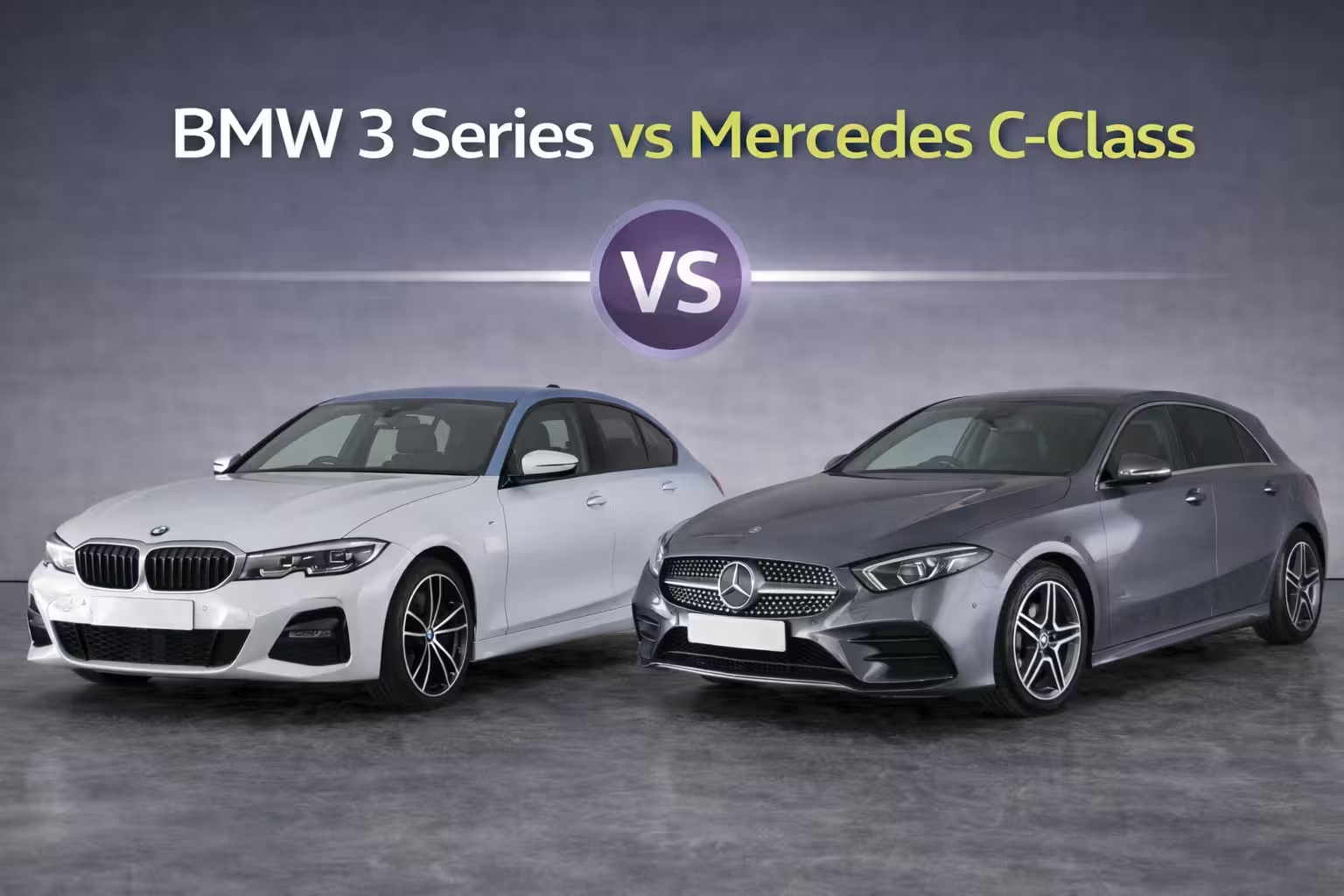
No two cars define the executive saloon segment more clearly than the BMW 3 Series and the Mercedes-Benz C-Class. They've competed directly for the same buyers for decades, they're priced within touching distance of each other on the used market, and they're both genuinely excellent cars. Choosing between them isn't obvious — and the right answer depends almost entirely on what you want from a car.
This comparison focuses on the 2022–23 used sweet spot: G20 generation BMW 3 Series (facelift from 2022) and the W206 Mercedes-Benz C-Class (launched 2021, facelift 2023). These are approximately three-year-old cars in 2026, well past their steepest depreciation and representing some of the most compelling value in the premium used market right now. Here's everything you need to know before you choose.
The basics: what generation are we talking about?
A used car comparison is only useful if you're clear about which versions you're looking at, because both models have had significant generational changes.
The BMW 3 Series G20 launched in 2019 and received a meaningful facelift in 2022 that updated the exterior, introduced an improved iDrive 8 infotainment system on higher-spec cars, and refined the engine range. The 2022–23 examples covered here are the facelifted G20 — a mature, well-sorted car that has had several years of early software and build quality issues resolved. The most common used variants in this price range are the 320i petrol, 320d diesel, 330i petrol, and 330e plug-in hybrid.
The Mercedes-Benz C-Class W206 is a full generational replacement launched from 2021, representing a complete redesign rather than a facelift. It introduced a dramatically new interior with a vertically-oriented central touchscreen directly inspired by the S-Class, a standard digital instrument cluster, and a significantly more modern design both inside and out. In 2022–23, the W206 was available as the C 200 petrol, C 220 d diesel, C 300 petrol, and C 300 e plug-in hybrid — all with mild hybrid technology as standard.
Design and exterior presence
Both cars are handsome, but they take different approaches to what an executive saloon should look like.
The BMW 3 Series G20 facelift is evolutionary rather than revolutionary. It's a clean, athletic shape with a wide kidney grille, sharper light signatures, and proportions that read as sporty rather than imposing. It's a car that looks best in motion — the long bonnet, low roofline, and rear-weighted proportions suggest speed before you've even started the engine. It's a recognisable BMW to any observer, which may be exactly what you want or entirely beside the point depending on your attitude to badge culture.
The W206 C-Class is the more visually striking of the two. The design takes clear cues from the larger E-Class and S-Class — a more cab-forward stance, a wider, lower front end with AMG-influenced styling on Sport and AMG Line variants, and a longer, more saloon-like rear. It looks more expensive than its price suggests, which is partly intentional — Mercedes deliberately brought S-Class design language downstream to the C-Class for the first time with the W206. On the road, it draws more attention than the equivalent 3 Series.
Estate versions are available for both — the BMW 3 Series Touring and the C-Class Estate — and both are genuinely attractive vehicles. The 3 Series Touring remains one of the best-looking load-luggers in the segment; the C-Class Estate is equally elegant. Both are worth considering for buyers who need the practicality.
Interior: the most important difference
This is where the two cars diverge most significantly, and it's the section that should carry the most weight in your decision.
The BMW 3 Series interior in 2022–23 facelifted form is a well-executed, driver-focused environment. iDrive 8 — available on higher-spec versions — is one of the best infotainment systems in the segment: fast, intuitive, and with excellent voice recognition. The 14.9-inch curved display combines digital instruments and the main infotainment screen into a single flowing unit that feels genuinely contemporary. Physical shortcut buttons have returned to the system after some controversy over the touchscreen-only approach on early iDrive 8 — a sensible decision for everyday usability. The dashboard is driver-centric in orientation, the steering wheel is perfectly sized, and everything that matters most to the person behind the wheel is positioned exactly where it should be.
Where the 3 Series interior falls slightly short is rear passenger space. It's perfectly adequate for two adults on reasonable journeys, but the relatively low roofline and short rear doors mean it doesn't feel generous. For a car of this price and positioning, some buyers find the rear accommodation somewhat compromised.
The W206 C-Class interior is genuinely remarkable for the class. The centrepiece is a 11.9-inch portrait-orientation MBUX touchscreen that dominates the centre console — and it is genuinely excellent. The screen is sharp, responsive, fast, and the MBUX system's voice recognition capability is among the best in any production car. The digital instrument cluster is crisp and customisable. The overall cabin quality — materials, fit, finish, tactile feel — is a meaningful step above the 3 Series and above anything else in the class at this price point. It feels like a smaller S-Class in a way no previous C-Class managed.
Rear space in the W206 is also noticeably more generous than the 3 Series. Legroom and headroom for rear passengers are class-leading for the segment. If you regularly carry passengers in the back, this is a significant advantage.
The caveat on the C-Class interior is that the reliance on the touchscreen for almost all functions takes some getting used to. Some controls that were physical buttons in the previous generation — temperature settings, volume, seat heating — are now buried in the touchscreen menus. This is a deliberate design choice and many owners grow to prefer it; others never stop finding it mildly frustrating.
Driving experience
This is BMW's traditional stronghold and the 3 Series defends it well. The G20 facelift drives with a precision and engagement that no direct rival has been able to fully replicate. The steering is well-weighted and communicative, body control is excellent, and the car responds to driver inputs with a directness that makes it rewarding on any kind of road. In Sport mode, the responses sharpen further; in Comfort, it settles into an impressively refined long-distance cruiser. This balance — genuinely engaging on a demanding road, genuinely relaxed on a motorway — is what the 3 Series has always done better than the competition, and the G20 continues that tradition.
The 330i and 330e are the sweetest-driving variants. The 320d diesel offers the best combination of real-world economy and performance for high-mileage drivers. The M340i xDrive — with a 374hp six-cylinder engine — is one of the most complete performance saloons available used in 2026 at any price.
The W206 C-Class drives well, but it's calibrated differently. It's softer, more comfort-biased, less interested in involving the driver and more interested in isolating them from the road. Refinement is exceptional — wind, tyre, and road noise are suppressed to a degree that even the 3 Series can't quite match. On a motorway, the C-Class is the more effortless experience. On a B-road, the 3 Series reminds you why the segment benchmark has carried its reputation for so long.
Neither is a bad driver's car. But if driving engagement is a priority, the 3 Series is the clear choice. If quiet, refined, long-distance comfort is more important, the C-Class edges it.
Engine and powertrain options
The 2022–23 BMW 3 Series range covers the most relevant options well. The 320i (184hp 2.0-litre petrol with 48V mild hybrid) is the volume seller — refined, reasonably quick, and good on fuel for a petrol. The 320d (190hp 2.0-litre diesel) remains the choice for high-mileage drivers and returns real-world fuel economy of 50–60mpg consistently. The 330i (258hp 2.0-litre petrol) is the most engaging non-M option. The 330e (292hp combined plug-in hybrid) offers around 36 miles of electric range and is the most tax-efficient choice for company car drivers. All 2022–23 variants use a 48V mild hybrid system.
The W206 C-Class range is similarly well-structured. The C 200 (204hp 2.0-litre petrol with EQ Boost mild hybrid) is the entry point. The C 220 d (200hp 2.0-litre diesel) is the high-mileage choice and real-world economy of 50–60mpg is achievable. The C 300 (258hp 2.0-litre petrol) is the performance petrol option. The C 300 e (313hp combined plug-in hybrid) offers around 62 miles of electric range — significantly more than the BMW's 330e — which makes it the most compelling PHEV in the class for drivers who can charge regularly.
The C-Class PHEV electric range advantage is worth noting specifically. If you have home or workplace charging, the C 300 e's 62-mile range means a significant proportion of daily journeys can be completed on electricity alone, with very low running costs. For company car drivers, both PHEVs attract a 3% Benefit in Kind rate in 2026, though this changes annually so current rates should be verified before a purchase decision.
Technology and infotainment
Both cars are well-equipped with technology on 2022–23 examples, but the quality and approach differs.
BMW's iDrive 8 system — present on M Sport and Sport Plus specification cars — is fast, feature-rich, and includes wireless Apple CarPlay and Android Auto on most specifications. The voice assistant is competent. The curved display looks impressive and functions well. On entry-level Sport specification, some 2022–23 3 Series cars have the older iDrive 7 system, which is still very good but less contemporary — worth checking which system a specific car has when buying.
Mercedes MBUX in the W206 is genuinely class-leading for the segment. The 11.9-inch portrait screen is the best infotainment display fitted to any car in this class. The “Hey Mercedes” voice assistant is outstanding — natural language understanding, contextual awareness, and the ability to control almost every vehicle function by voice is genuinely useful rather than a novelty. Augmented reality navigation (available on higher-spec cars) overlays directions onto a live camera view of the road ahead, which is excellent in unfamiliar urban environments.
Both cars include the expected suite of driver assistance technology: adaptive cruise control with lane-keeping assist, automatic emergency braking, blind spot monitoring, and parking sensors with cameras. The quality of these systems is broadly comparable, with neither having a significant advantage in everyday use.
Reliability and ownership
Reliability is the area where both brands carry ongoing scrutiny, and it's worth being honest about.
The BMW 3 Series G20 has a generally strong reliability record for this class. The 2.0-litre petrol and diesel engines are well-proven units. The 48V mild hybrid system has been relatively trouble-free on 2022–23 examples. Early G20 cars (pre-facelift) had some reported iDrive software issues and occasional electrical niggles; the 2022 facelift largely resolved these. As with any BMW, independent specialist servicing is significantly cheaper than main dealer servicing and perfectly appropriate on out-of-warranty cars.
The W206 C-Class is a newer design and therefore has a shorter track record. Early W206 production (2021–22) saw some reported issues with the MBUX system, infotainment software, and the 48V mild hybrid system's integration. Most of these were addressed through software updates and running changes on later production. 2022–23 examples are generally better sorted than the very earliest W206 cars. The complexity of the interior technology — more touchscreen-dependent than the BMW — means more to go wrong if something does fail.
Both cars should be purchased with a full service history check. On a BMW, verify that oil service intervals have been followed (the cars can display long variable intervals that some owners stretch). On a Mercedes, confirm that any MBUX or mild hybrid software recalls have been completed.
Used prices in 2026
Both models have depreciated from their original list prices to genuinely compelling used values. A 2022–23 BMW 3 Series 320d M Sport in typical used condition can be found in the £27,000–£34,000 range depending on mileage and specification. The 330e PHEV typically commands a premium of £2,000–3,000 over a comparable 320d at similar age and mileage. The M340i xDrive is typically £38,000–45,000 for 2022–23 examples.
The W206 C-Class is priced slightly above the equivalent 3 Series on the used market, reflecting its newer design and higher original list price. A 2022–23 C 220 d AMG Line in comparable condition is typically £30,000–£37,000. The C 300 e PHEV, given its class-leading electric range and company car appeal, tends to hold its value well and is typically £33,000–40,000 for 2022–23 examples.
Both represent excellent value against their original list prices, which were typically £42,000–50,000+ for well-specified variants. The premium executive sector has seen meaningful depreciation on three-year-old cars, and buyers who want a well-specified premium saloon without new car pricing are well served by either option right now.
Running costs
Running costs are broadly similar for equivalent powertrain choices. The diesels return real-world economy of 50–60mpg for both brands, making them strong choices for high-mileage drivers. The petrol mild hybrids are comparable in efficiency between the two cars. Service costs are broadly similar, though Mercedes main dealer servicing tends to be marginally more expensive than BMW; independent specialist servicing closes the gap considerably on both.
Insurance groups are similar for directly comparable variants, with the BMW typically insuring at a slightly lower group than the equivalent Mercedes — though individual quotes vary significantly by driver profile and postcode.
For company car drivers, both the 330e and C 300 e attract the same 3% BIK rate in 2026 — but the C 300 e's greater electric range means lower pence-per-mile running costs for drivers who can charge, which can make a material difference over a three-year company car cycle.
Who should buy which?
The BMW 3 Series is the right choice if you genuinely enjoy driving. It's the car for buyers who want a saloon that rewards them on every journey, not just on the motorway. It's also the right choice if the iDrive 8 interface appeals to you more than the touchscreen-centric MBUX approach, or if you want the very best diesel option in the class with the 320d. It's typically a few thousand pounds cheaper than the equivalent C-Class, making it the stronger value buy if the interior tech advantage of the Mercedes doesn't justify the premium for you.
The Mercedes-Benz C-Class W206 is the right choice if you prioritise interior quality and passenger comfort above driving engagement. The cabin is genuinely class-leading — it feels more expensive than it is, and it's the car that impresses passengers most. If you regularly carry rear passengers, the better rear space is meaningful. If the MBUX system genuinely excites you, the technology experience is ahead of anything else in the class. The C 300 e PHEV is also the standout choice for company car drivers who can charge.
If you're genuinely torn — and many buyers are — the answer often comes down to how you use the car. Solo commuter and weekend driver who covers varied roads: 3 Series. Family saloon replacing an SUV, or someone who values the premium cabin experience: C-Class. Both are excellent. Neither is the wrong choice.
Find a used BMW 3 Series or Mercedes C-Class at Carsa
Carsa stocks both the BMW 3 Series and Mercedes-Benz C-Class regularly, all priced on average £700 below market value and comprehensively inspected before sale. Every car comes with a 90-day warranty as standard, and finance is available from 8.9% APR representative. Check your eligibility with a soft search — no impact on your credit score.
Browse used executive cars at Carsa →
Related articles



Ready to find your next car?
Browse hundreds of expertly prepared used cars — all fully checked, cleaned, and ready to drive away.
Talk to us, anytime.
Our friendly team is just a message or call away.
Message us on whatsapp, 24/7