
Tesla Model 3 vs BYD Seal: Used Electric Car Comparison 2026
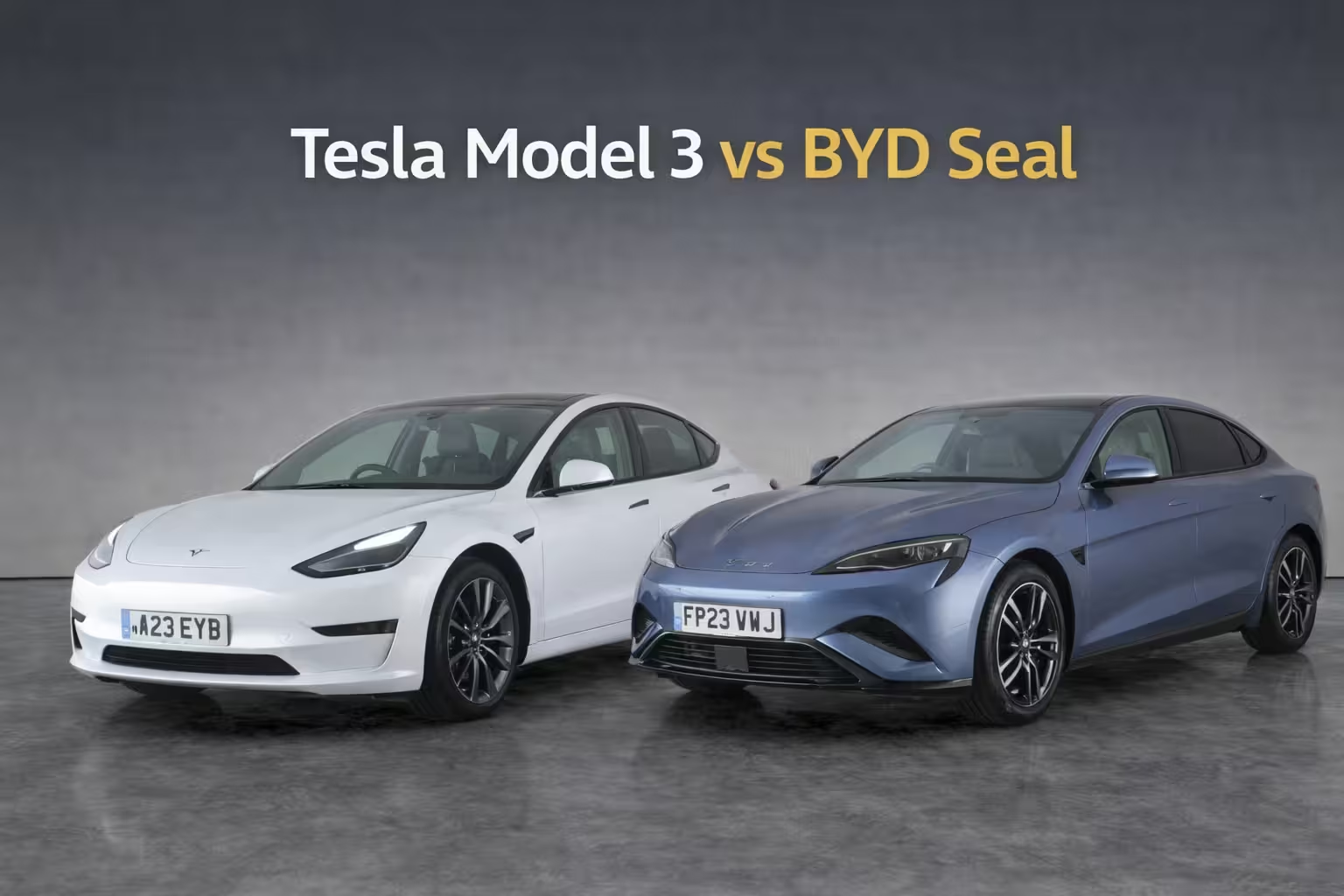
The used electric car market in 2026 looks very different to how it did just two years ago. The Tesla Model 3 — long the default answer when someone asked "which used EV should I buy?" — now has genuine competition. The BYD Seal arrived in the UK in 2023 and has quietly built a reputation as one of the most accomplished electric saloons on sale at any price.
But which one is actually better as a used buy? That depends entirely on your budget, your priorities, and how you use your car. This guide breaks both down honestly.
At a Glance: What Are These Cars?
The Tesla Model 3 needs little introduction. Launched in the UK in 2019, it transformed the EV market by combining genuine long range, rapid charging, and a minimalist interior into one package that — crucially — depreciated quickly enough to become accessible on the used market. In 2026, a used Model 3 can be had from under £13,000, making it one of the most compelling used EV propositions available.
The BYD Seal is newer territory for most UK buyers. BYD — the world's largest EV manufacturer by volume — launched the Seal in Britain in 2023. It's a proper rival to the Model 3 in size and intent: a five-seat electric saloon with impressive range, a luxurious interior, and tech that genuinely challenges Tesla's dominance. Used examples are now appearing on the market, though at higher price points given the car's relative newness.
Design & Exterior
Both are sleek, low-slung electric saloons — but they express it differently.
The Tesla Model 3 (particularly the post-2023 'Highland' facelift) is clean, restrained, and deliberately anonymous. Some love the understated minimalism; others find it a little characterless. It has good proportions and a low drag coefficient that helps range, but it won't turn heads in the way sportier cars do.
The BYD Seal makes more of a statement. Its sweeping roofline, muscular haunches, and distinctive LED light signatures give it a genuinely premium presence. Parked next to a Model 3, the Seal looks like the more expensive car — which, in the used market right now, it generally is.
Interior & Technology
Inside the Tesla Model 3, the story is familiar: a vast 15.4-inch central touchscreen controls almost everything, the dashboard is almost completely uninterrupted, and the overall effect is one of calm, modern minimalism. Some love it; some find the removal of a traditional instrument cluster disorienting. Build quality improved significantly on the Highland facelift, which addressed many early criticisms about panel gaps and interior plastics. The rear seat is adequate but not generous — taller passengers may find legroom tight on longer journeys.
The BYD Seal takes a different path. Its rotating 15.6-inch touchscreen (which swivels between landscape and portrait) is a genuine talking point, and the interior quality feels a step above what you'd expect for the price — soft-touch materials, a panoramic glass roof, and genuinely impressive rear passenger space make it feel more like a premium European saloon than a budget Chinese newcomer. The Seal's interior is simply one of the best in its class at this price point.
Range, Charging & Real-World Performance
Range anxiety is still real for EV buyers in 2026, even if charging infrastructure has improved dramatically. Here's how both cars stack up.
The Tesla Model 3 Long Range (AWD) offers up to 358 miles of official WLTP range — one of the best figures in the segment. Even the Standard Range models deliver a practical 270–305 miles depending on year. Tesla's Supercharger network remains the gold standard for public rapid charging in the UK: over 1,600 Supercharger stalls nationally, with consistent speeds and reliability that no other network quite matches. Peak charging speeds on Model 3 reach up to 250kW on the Highland refresh.
The BYD Seal with the larger 82.56kWh battery offers up to 354 miles WLTP — highly competitive. The AWD Excellence variant adds a front motor for 523ps and 0–62 in 3.8 seconds, while the rear-wheel drive Design model is more than quick enough for everyday use. BYD uses its proprietary e-Platform 3.0 with blade battery technology, which offers exceptional thermal stability and longevity. Charging peaks at 150kW — fast, but behind Tesla's latest figures. The Seal can also act as a V2L (vehicle-to-load) power source, useful for camping, powering tools, or emergency home backup.
Tesla Model 3
2020 Model 3 Standard Range Plus RWD
Saloon · Electric · Auto · 72,284 miles
£12,929
View AllTesla Model 3
2021 Model 3 Long Range Dual Motor AWD
Saloon · Electric · Auto AWD · 77,034 miles
£14,958
View AllTesla Model 3
2021 Model 3 Long Range Dual Motor AWD
Saloon · Electric · Auto AWD · 72,762 miles
£15,002
View AllDriving Experience
Both are quick, smooth, and refined — but they feel quite different in character.
The Tesla Model 3 is the sharper, more driver-focused car. Its steering is well-weighted, body control is tight, and there's a genuine sense of connection that makes motorway driving relaxed and B-road driving genuinely enjoyable. The one-pedal driving implementation is class-leading, and over-the-air updates have continued to improve the driving experience since these cars were new.
The BYD Seal prioritises comfort and refinement. It rides more softly, absorbs bumps more gracefully, and feels more luxurious in its overall demeanour. It's less sporty than the Model 3, but for long-distance motorway runs or daily commuting, the Seal's composure is genuinely impressive. The AWD variant's performance is startling — 3.8 seconds to 62mph — but even the RWD model has pace to spare.
Which One Should You Buy?
The honest answer: it depends on your budget and priorities.
If value is the priority, the Tesla Model 3 wins. A well-maintained used example from £12,000–£18,000 gives you proven reliability, the best charging network in the UK, strong resale values, and an interior that — while polarising — is genuinely functional. For first-time EV buyers, the Tesla ecosystem remains the most reassuring entry point into electric motoring.
If you want the more premium experience — a more luxurious interior, more rear legroom, V2L capability, and a car that feels fresher and less ubiquitous — the BYD Seal is genuinely exceptional. It's not significantly less reliable than a Tesla in the used market (early reports are encouraging), and it undercuts equivalent new EVs by a substantial margin. For buyers with a budget of £25,000–£32,000 for a used EV, the Seal deserves serious consideration.
At Carsa, we stock both — every car priced below market value, fully prepared, and backed by a 90-day warranty. Finance from 8.9% APR, part exchange welcomed.
Related articles



Ready to find your next car?
Browse hundreds of expertly prepared used cars — all fully checked, cleaned, and ready to drive away.
Talk to us, anytime.
Our friendly team is just a message or call away.
Message us on whatsapp, 24/7