
Top tips for driving at night in 2026
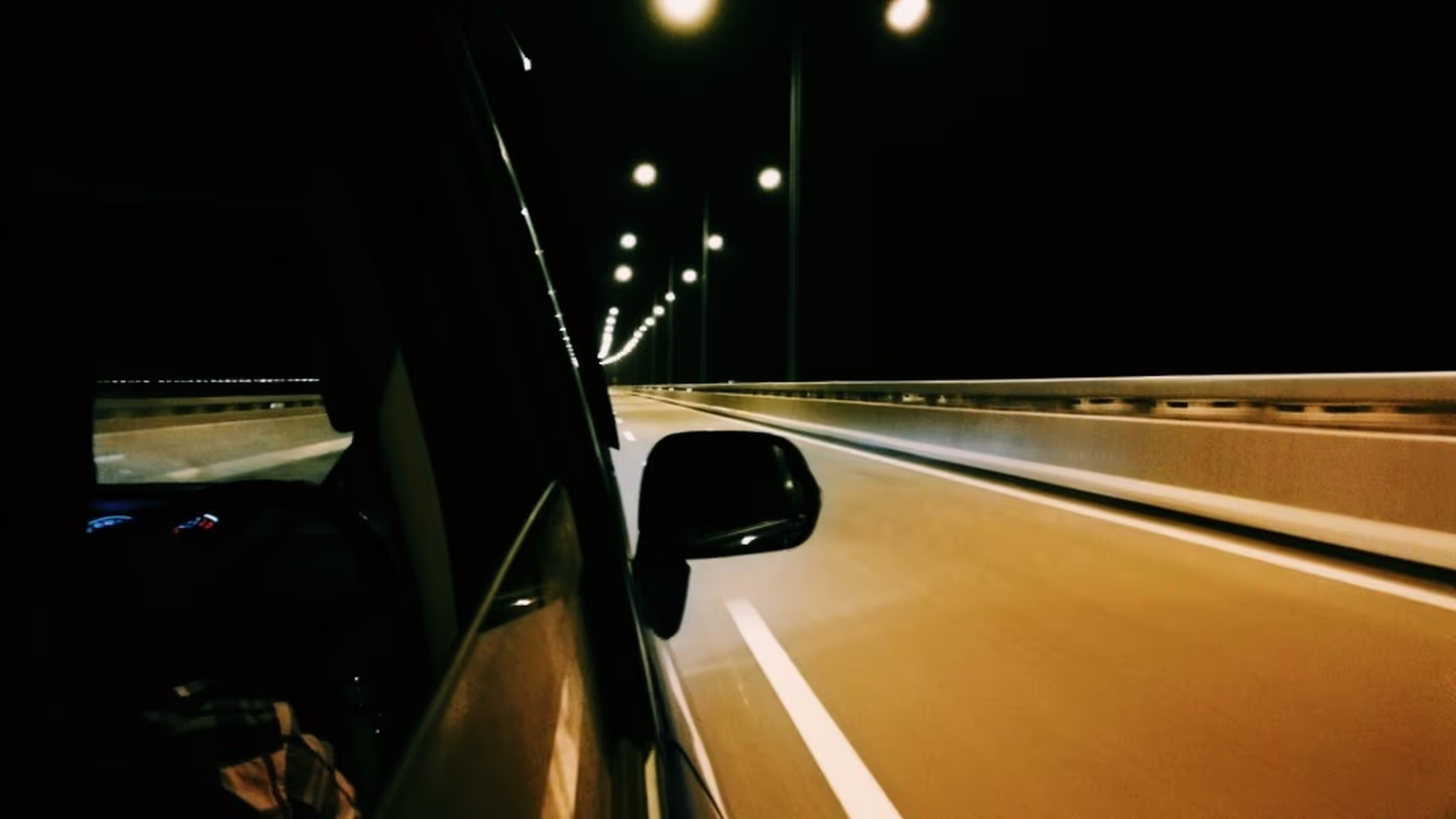
Night driving accounts for a disproportionate share of serious road accidents in the UK — despite carrying a fraction of daytime traffic. Reduced visibility, fatigue, and the glare of oncoming headlights all play a part. The good news is that with a bit of preparation and the right habits, driving after dark doesn't have to be stressful. Here are our updated tips for 2026.
1. Check your lights before you set off
It sounds obvious, but a surprising number of drivers don't realise a headlight has failed until they're already on the road. Before any night drive, do a quick walk-around: check both headlights (main beam and dipped), rear lights, brake lights, and indicators. If you're alone, reverse up to a wall or garage door to check the rear.
Most modern cars will flag a bulb failure on the dashboard, but don't rely on this alone — some systems only detect certain bulb types. If your car has automatic lighting, make sure it's set to auto rather than off or sidelights only. Many newer cars also have adaptive headlights that swivel to follow bends; if yours does, make sure they're clean and properly aligned.
2. Keep your windscreen and lights clean
A smeared windscreen can turn oncoming headlights into a blinding starburst. Clean the inside of your windscreen thoroughly — interior grime builds up gradually and is easy to miss in daylight but immediately obvious at night. Use a microfibre cloth and a good glass cleaner, paying particular attention to the corners and the area just above the dashboard.
Clean headlight lenses too. Yellowed or foggy plastic lenses — common on cars over five years old — can reduce headlight output by up to 50%. Headlight restoration kits are inexpensive and genuinely effective. While you're at it, make sure your wiper blades are in good condition: smearing at night is far more distracting than in daylight.
3. Reduce your speed and increase your following distance
Your stopping distance doesn't change at night, but your ability to spot hazards ahead does. A pedestrian in dark clothing, a cyclist without lights, or debris in the road can appear at the edge of your dip beam with much less warning than in daylight. Reducing your speed — even by 5–10mph on unlit roads — gives you meaningfully more reaction time.
The Highway Code's two-second rule for following distance applies in ideal conditions. At night, particularly on unlit rural roads or in rain, a three-second gap is a better starting point. This also reduces the discomfort of having the car in front's rear lights directly in your field of vision for extended periods.
4. Manage glare from oncoming headlights
Modern LED and matrix headlights are significantly brighter than older halogen units — which is great for the driver using them, but can be dazzling for everyone else. If you're being dazzled by oncoming lights, look towards the left-hand edge of the road rather than directly at the source. This uses your peripheral vision to track the road while avoiding the worst of the glare.
Make sure your rear-view mirror is set to the night driving position (the small lever underneath, or automatic on most newer cars). Wing mirrors can't be adjusted for night driving, so if a driver behind you has very bright lights, adjusting your position slightly within the lane can help.
5. Dim your dashboard and screens
A bright instrument cluster or large infotainment screen creates a significant contrast between the interior of your car and the darkness outside — making it harder for your eyes to adapt to the road. Most cars automatically dim displays when it gets dark, but the default setting is often still brighter than ideal. Manually reduce dashboard brightness to a comfortable level and turn off any non-essential interior lights.
If you use a phone for navigation, reduce the screen brightness and switch to a dark or night mode. Phone mounts placed at the wrong height can also cause glare in the windscreen — check this before setting off.
6. Watch out for vulnerable road users
Cyclists, pedestrians, motorcyclists, and horse riders are significantly harder to see at night. Cyclists in particular are legally required to have front and rear lights after dark, but not all do — and even with lights, the contrast on unlit country roads can be poor. When approaching junctions, bends, or narrow lanes at night, slow down and assume there may be someone just out of view.
Rural roads are particularly unforgiving: deer and other animals can appear suddenly in headlight beams, often freezing rather than moving. If you see animal eyes in your lights, slow right down — there may be more than one.
7. Take regular breaks on long night drives
Fatigue is one of the biggest contributors to night-time accidents. The body's natural drive to sleep intensifies in the small hours (2–4am is the highest-risk window), but tiredness can set in on any evening drive after a long day. The standard advice applies: take a break every two hours, don't drive for more than eight to nine hours in total, and if you feel yourself becoming drowsy, stop somewhere safe and take a 20-minute rest.
Caffeine can help in the short term but is not a substitute for actual rest. Opening a window, turning up the radio, or talking to a passenger can mask tiredness temporarily — but none of these reduce reaction time in the way that a proper break does.
8. Be prepared for the unexpected
Before setting off on any significant night drive, run through a few essentials: do you have enough fuel or charge? Is your phone charged? Do you know roughly where the nearest services are on your route? If you break down at night on an unlit road, visibility is a serious concern — a hi-vis jacket and a warning triangle in the boot are worth having. On smart motorways, knowing where the nearest Emergency Refuge Area is and how to use the SOS phone could matter considerably.
The What3Words app remains one of the most useful tools to have on your phone for emergencies — it gives a precise three-word address for any location, making it far easier to direct rescue services to your exact position on an unlit road.
9. Modern driver assistance at night
If your car has driver assistance features, make sure you know how they behave at night. Adaptive cruise control and lane-keeping systems work from cameras that can be less effective in low light or when lane markings are worn or absent. Automatic emergency braking (AEB) typically uses radar as well as cameras, so it remains effective at night — but don't treat any system as a substitute for your own attention.
Matrix or adaptive headlights, if your car has them, automatically adjust the beam pattern to avoid dazzling oncoming drivers while keeping as much road illuminated as possible. These are particularly effective on unlit rural roads and worth using to their full capability.
10. If in doubt, take a different route or wait
On unfamiliar roads, in bad weather, or when you're genuinely tired, the best decision is sometimes to stop, find somewhere safe to park, and rest before continuing. There's no journey worth risking your safety for. If you're buying a car partly with night-time motorway or rural driving in mind, it's worth checking whether the model you're considering has matrix headlights, night-vision cameras, or AEB — features that make a genuine difference after dark.
Want to talk through what to look for? Get in touch with the Carsa team, or browse our used car range to find a well-specified car that's ready for anything — day or night.
Related articles

Ready to find your next car?
Browse hundreds of expertly prepared used cars — all fully checked, cleaned, and ready to drive away.
Talk to us, anytime.
Our friendly team is just a message or call away.
Message us on whatsapp, 24/7